How We Know the Next Bull Cycle Will Come
The Onchain Migration has Started
September 06, 2023
L
GM PRO DOers! 😎
It’s been a rough month for our beloved crypto assets, hasn’t it? 😓
As you can see below, after a good start to 2023, August was the worst month of the year and September doesn’t appear to be starting out much better. 😬
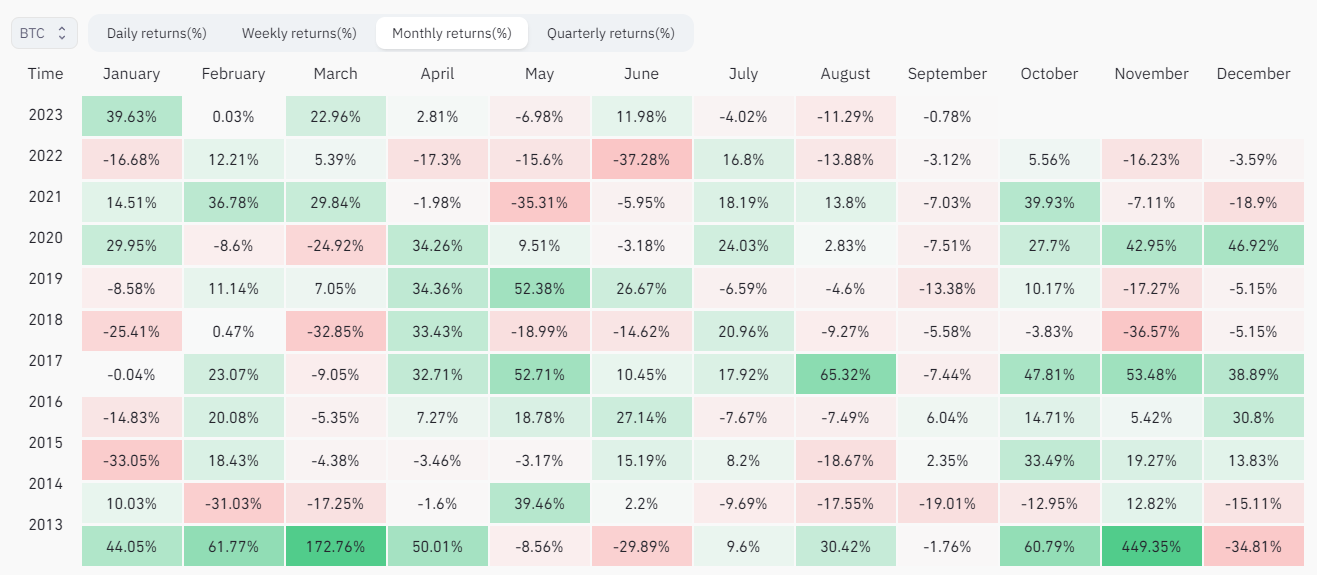
In fact, September appears to never perform well in crypto (see the September column above 📉).
As bad as it seems at the moment, if you were buying in late 2022 and early 2023, then you’re actually sitting pretty on the year. 👏
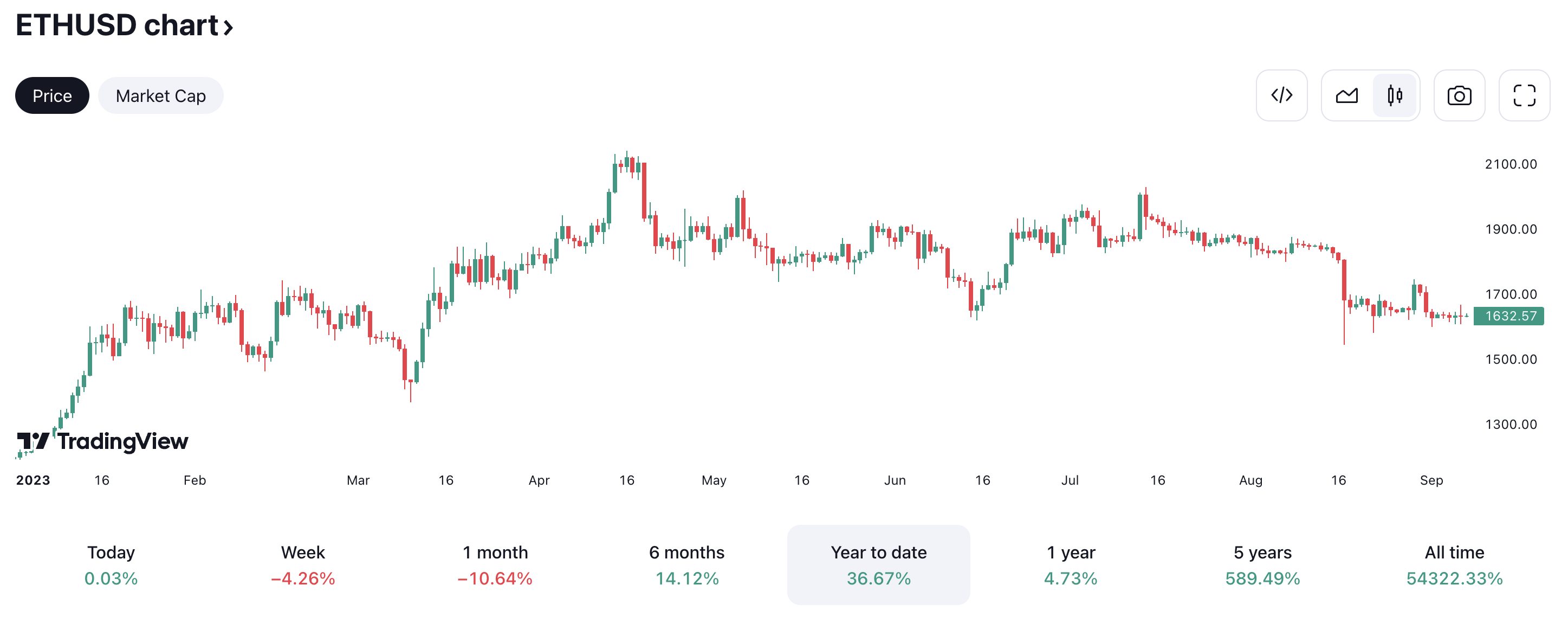
$ETH is currently up 36% year to date (YTD)...
And $BTC is up 55% YTD…
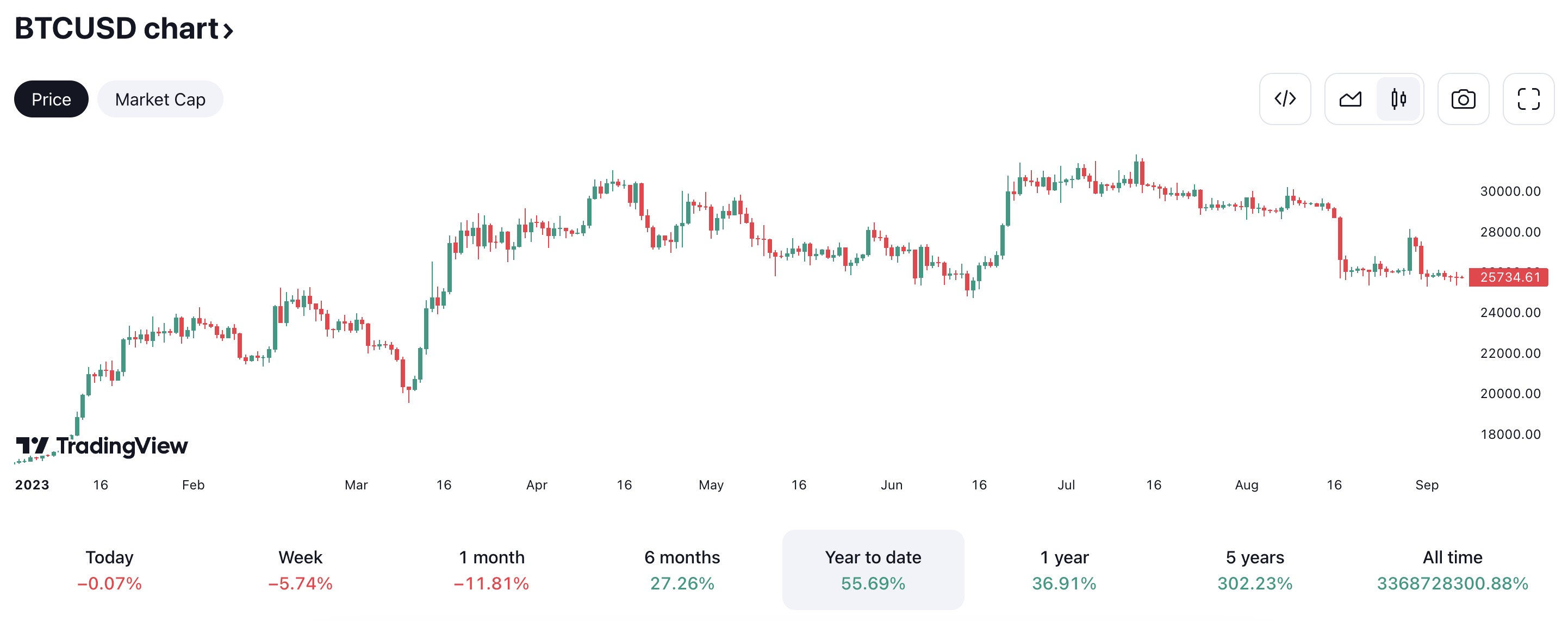
Not so bad after all. 👍
But what about the rest of the year and beyond? 🤔
Will we ever get out of this bear market? 🤷
Will the good ol’ days of “up only” from 2020-21 when crypto assets soared by 50-100% within weeks and kept on climbing for months, ever return? 😅
The answer is yes. 100% we will.
In this PRO report I’m going to show you how I know that and what you can do to capitalize on that upcoming opportunity. 💰
We’re looking at market cycles and onchain data to understand if the next bull market will return.
Let’s go. ⏬
History Doesn’t Repeat But It Often Rhymes 🎶
Let’s start by zooming out on the performance of Bitcoin since 2011.
Here’s a picture charting the past 4 cycles of Bitcoin, including the current cycle which sits in the pre-bull phase.
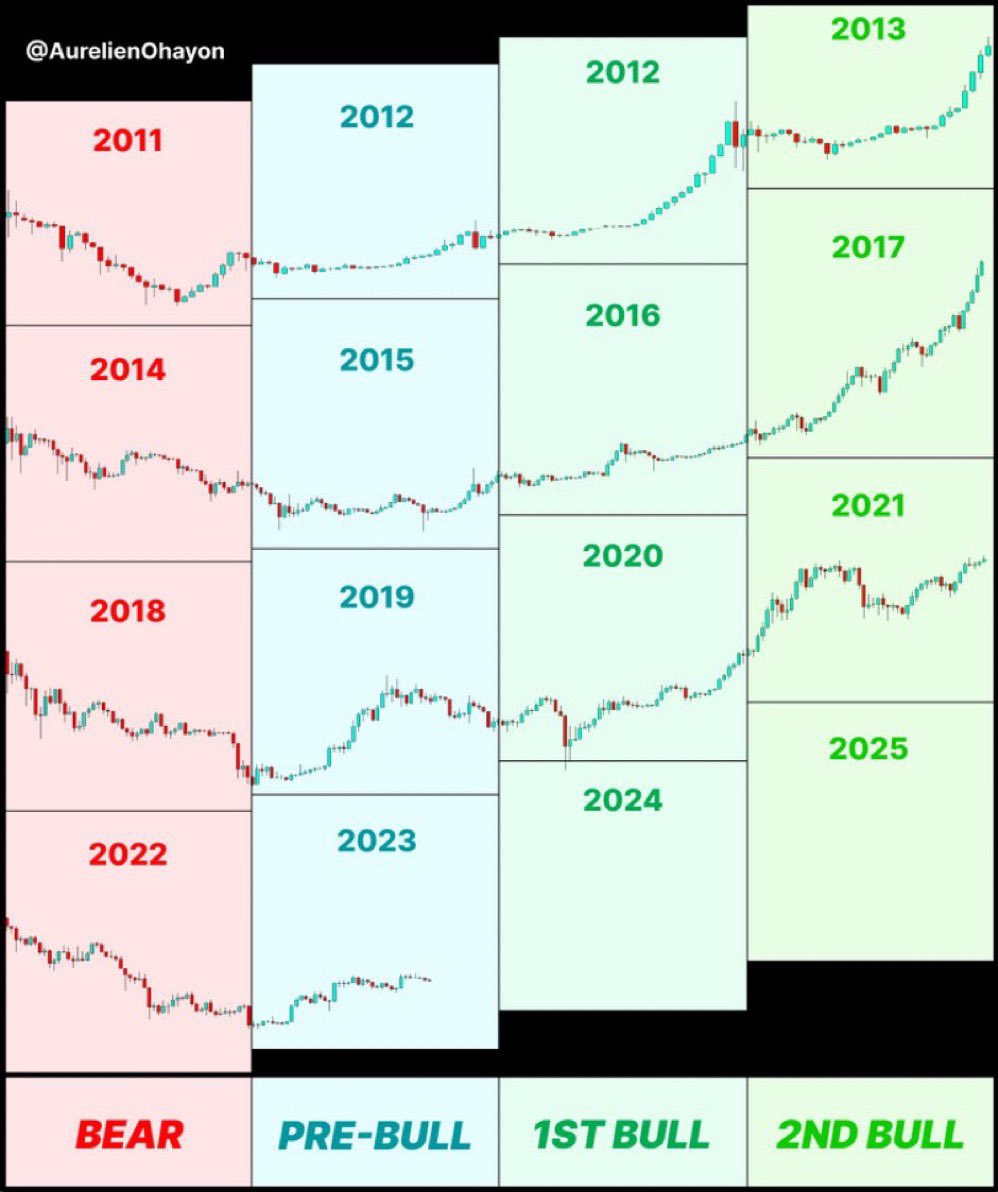
2024-25 looks like it may just bring us a lot of opportunities. But let’s look at this chart a different way.
Here is the same price chart but rather than split up by cycles in a linear fashion, we instead look at price on a logarithmic scale ($1, $10, $100, $1000, etc.).
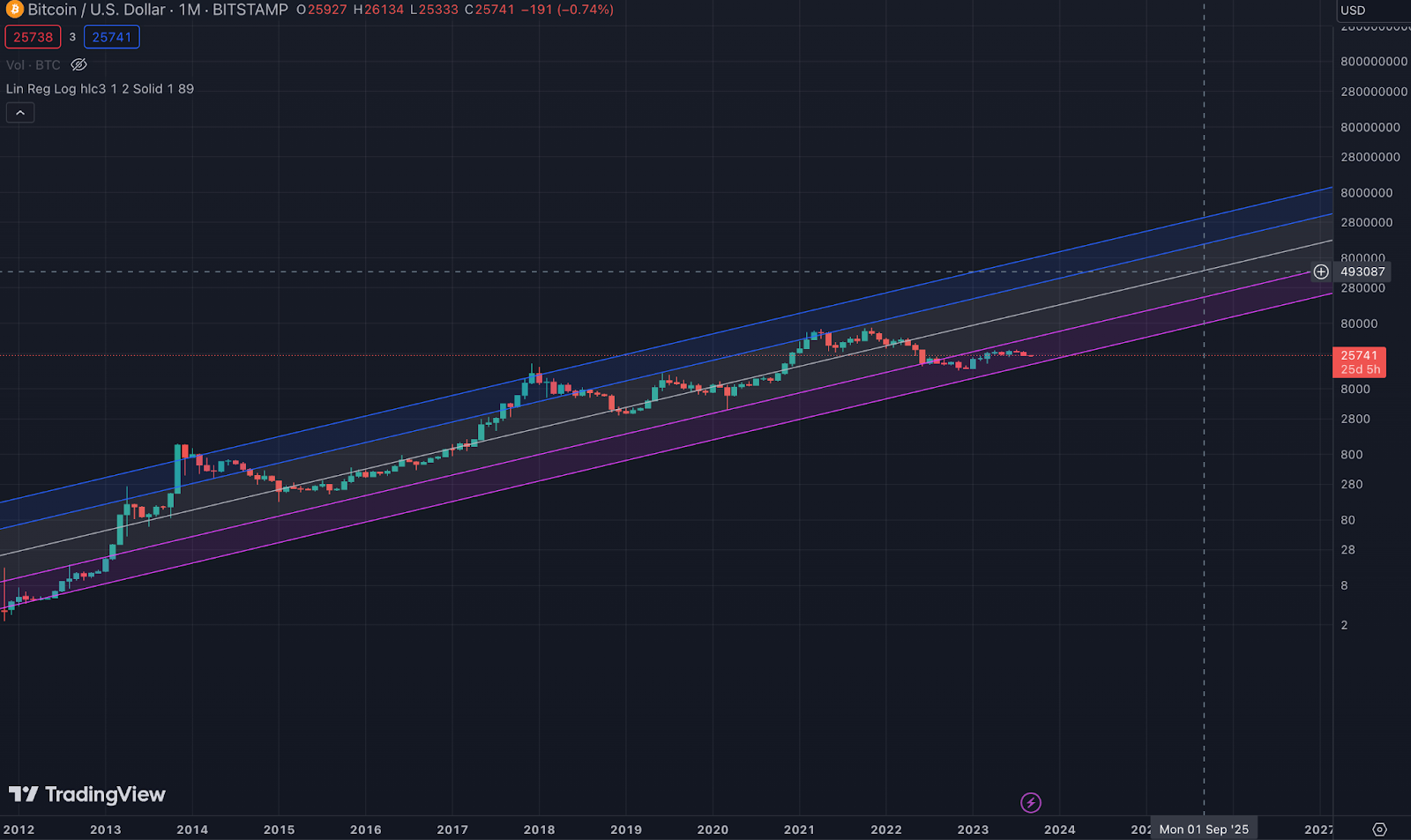
Bitcoin is in a lower range than it has been in the last years, but still within its logarithmic scale (a scale that maps the valuation growth of network based technologies).
And here is $ETH, at the same point on the scale that it was last cycle, just before we went on a 2 year bull run. 🚀

In every past market cycle, Bitcoin and Ethereum have always returned to their average trend lines, which you could think of as their "fair value prices," and often even soared much higher. 📈
Interestingly, if you zoom into the 2 charts above, you'll see my cursor at the intersection of the trend line and the date September 2025.
According to these projections, the 'fair value' for Bitcoin could be around $500,000 USD, and for Ethereum, it could be about $25,000 USD 2 years from now. 🚀
To be clear, I’m not saying that we will reach these numbers in this timeframe. In fact, I have no idea.
I’m just saying that this scale has accurately shown the growth range over time for many network-based technologies before Bitcoin and Etherum (Amazon, Google, Microsoft, Apple, etc…).
These projections seem outrageous, right? But if you consider that this has already happened 3 times in the past, it doesn't seem all that far-fetched. 🤔
So how do I know we will get another cycle?
How do I know history will repeat one more time?
Simple. Technologies with secular trends of adoption will always go through pricing cycles. ♻️
As you can see from the picture below, as long as the technology continues to improve and gain adoption, the price will continue to grow along with it, cycling above and below over time.
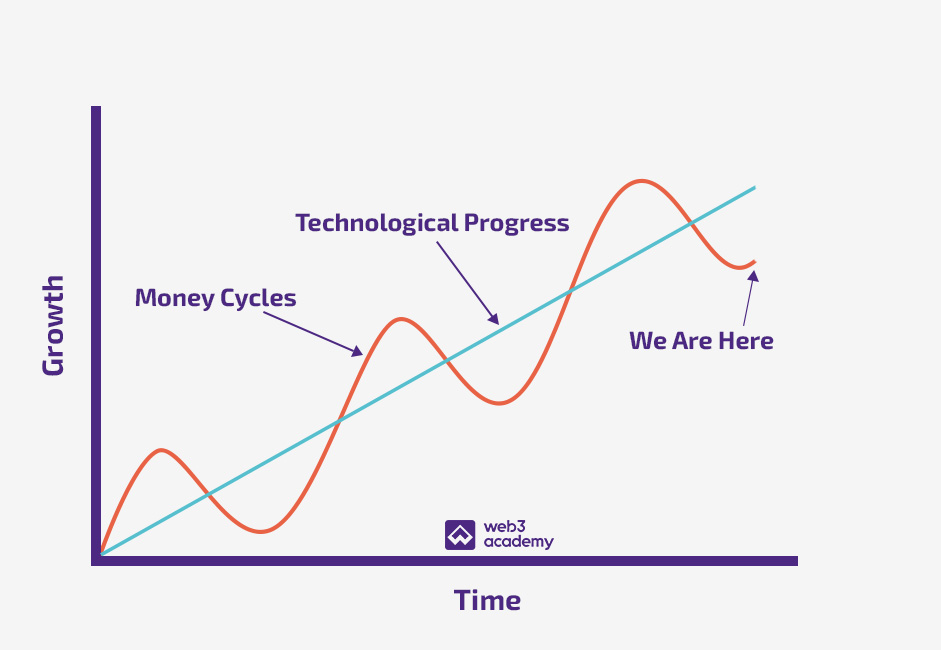
To figure out if we're in for another growth cycle, we just need to understand whether the technology is advancing and more people are using it. The trick is not to get hung up on the same metrics or use cases that fueled the previous cycle of adoption.
Remember, history doesn’t repeat but it often rhymes. We need to see new and innovative use cases gaining adoption.
If we look back at the crypto cycles image, there are clear catalysts of innovation within each cycle:
2012 = Blockchains
- People were innovating with Blockchain by forking Bitcoin and experimenting with its potential. This created a buzz of exploration in the industry for the first time.
2016 = Smart Contracts and Tokens
- The launch of smart contracts offered a whole new world of experimenting on blockchains, paving the way for ICOs (initial coin offerings).
2020 = DeFi & NFTs
- Yield farming, DeFi, Digital Art, and PFPs (NFTs) brought real use cases and the next wave of user adoption and applications on top of blockchains.
So what’s the next big catalyst for adoption in crypto and web3 that we can expect for 2024 and beyond?
I’m not sure anyone can predict that, but it appears that there are plenty of potential options.
2023 has been a massive year for onchain adoption across various use cases and applications. 🚀
Let’s jump onchain to take a closer look at the current onchain bull run we already find ourselves in. 🤩
The Onchain World Is Growing ⬆️
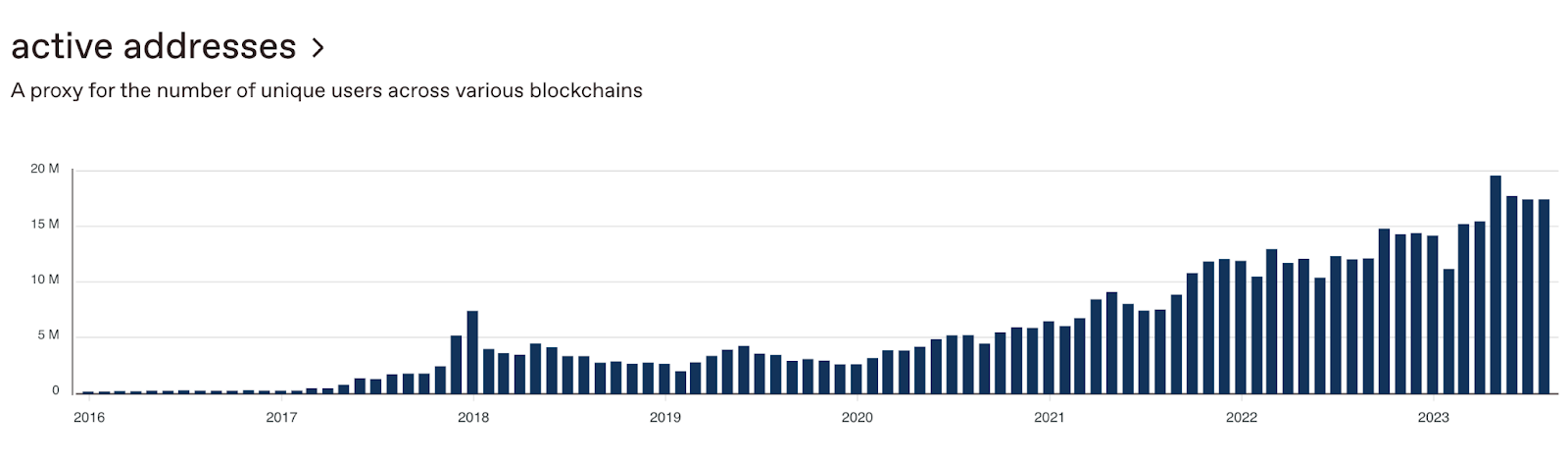
It’s clear that the onchain world is progressing, even though the markets suggest otherwise.
Here is the growth of unique active users onchain… (up only) 📈
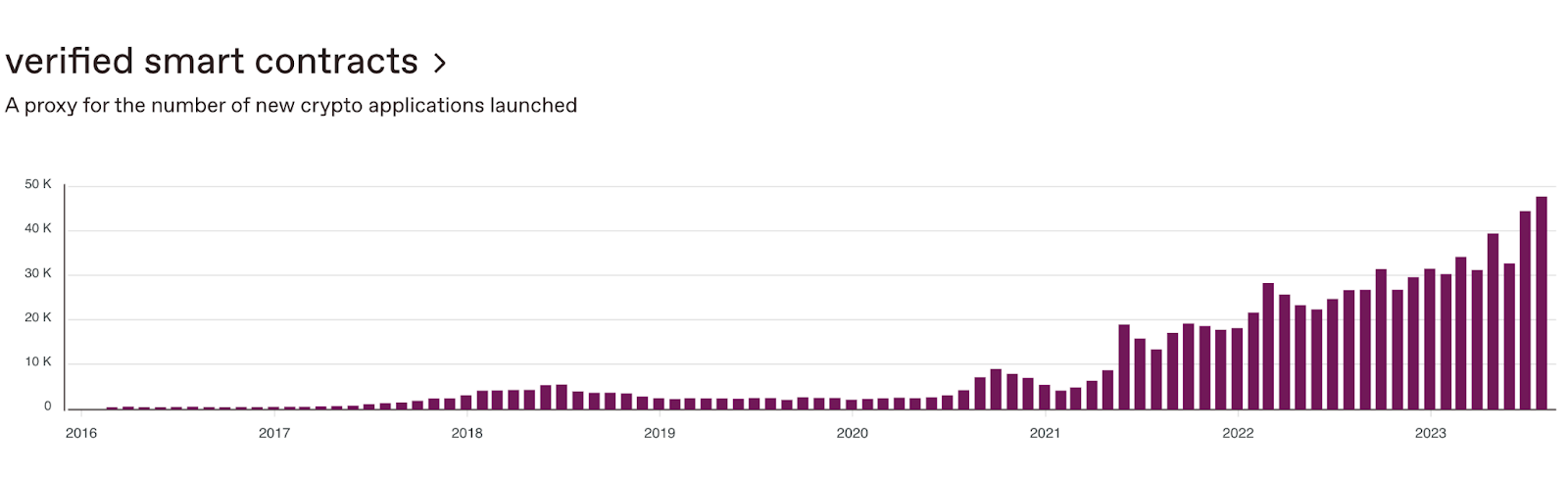
And here is the growth of verified smart contracts onchain (new crypto applications), which is a telltale sign of future user adoption coming… (up only) 📈
But why are we seeing this sort of adoption? What is moving onchain?
Answer: EVERYTHING. 🤯
Literally, everything. Blockchain technology has progressed so much in the last few years that most things online (and even in the physical world) are moving onchain.
It’s still early days for most, but look at these metrics…
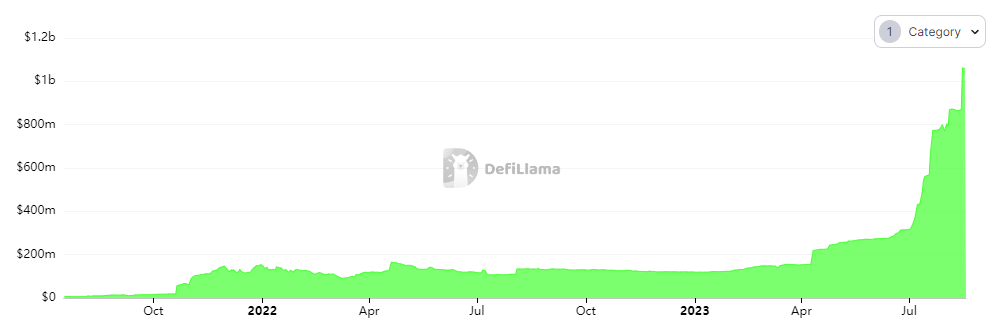
Here is the growth of real world assets moving onchain (from <$100m to $1.1B in the last year):
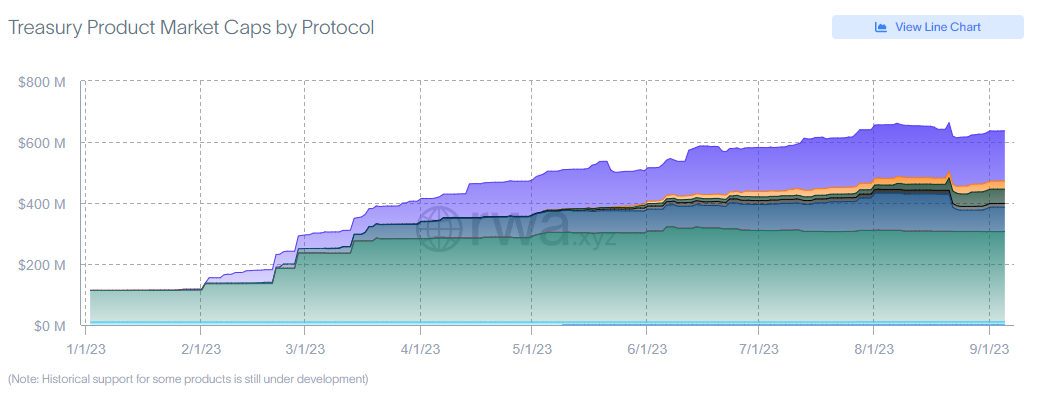
Treasuries are also moving onchain… (from $100m to $600m+ YTD).
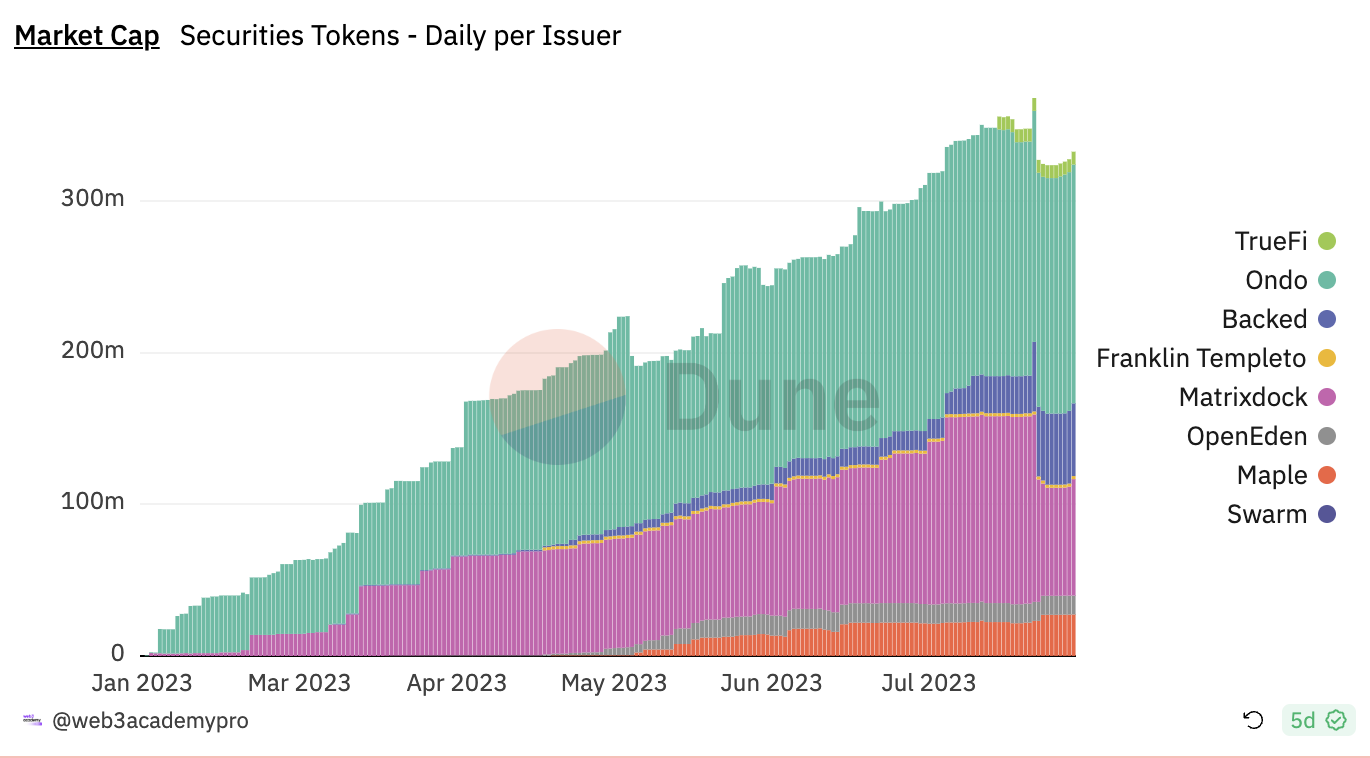
And so are public securities… ($0 - $300m+ in 8 months!)
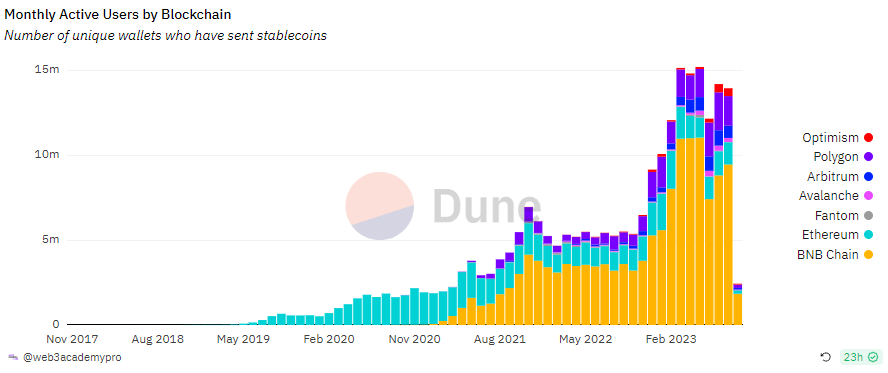
Of course, FIAT is moving onchain in the form of stablecoins. 💲
But it’s not just financial assets moving onchain. So many other things we do online are moving onchain too, like social media for example:
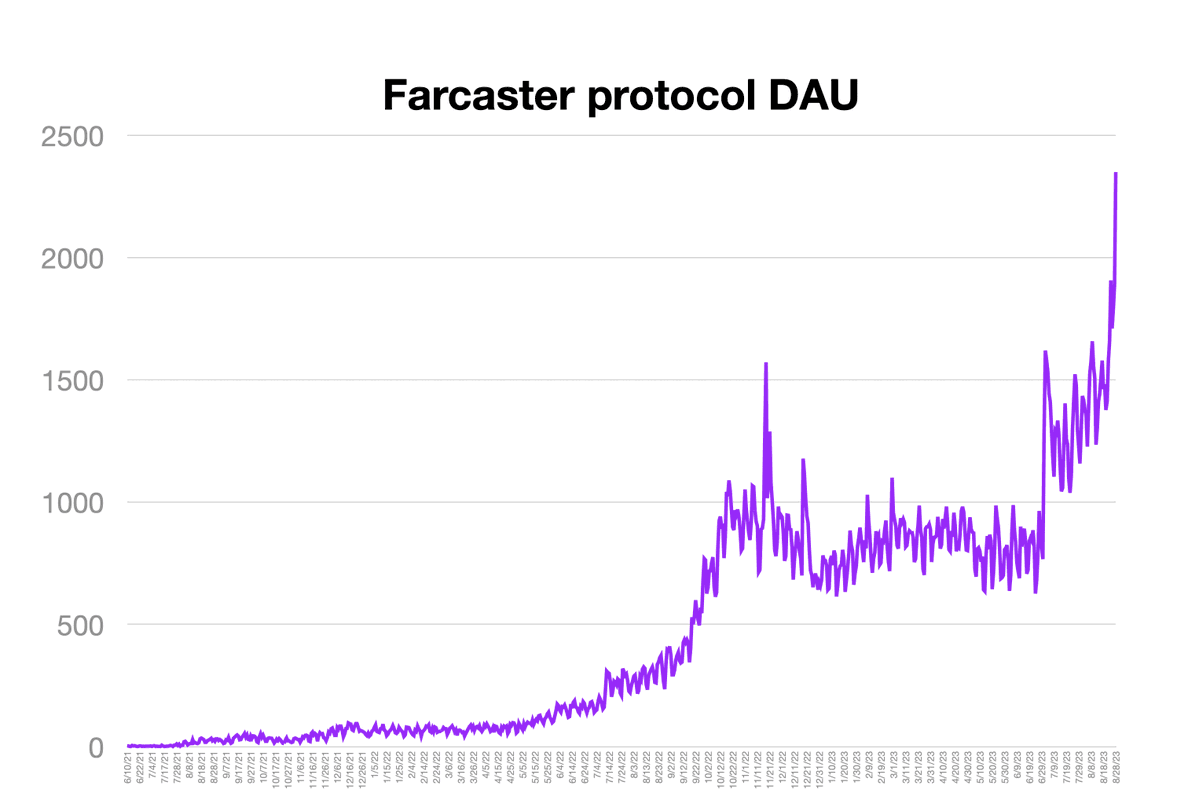
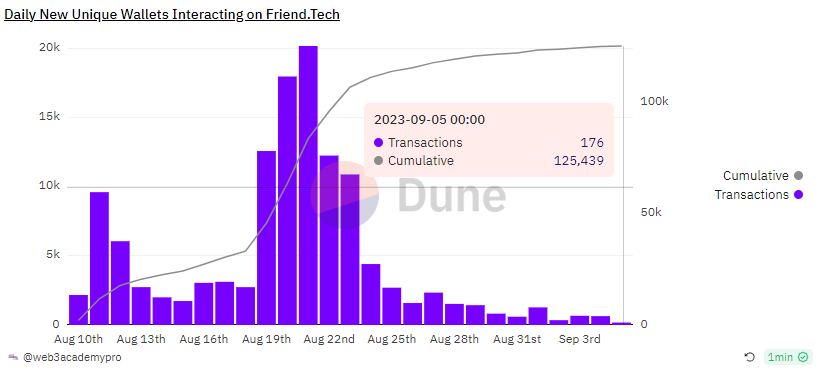
And even the value of web2 social accounts recently moved onchain with friend.tech…
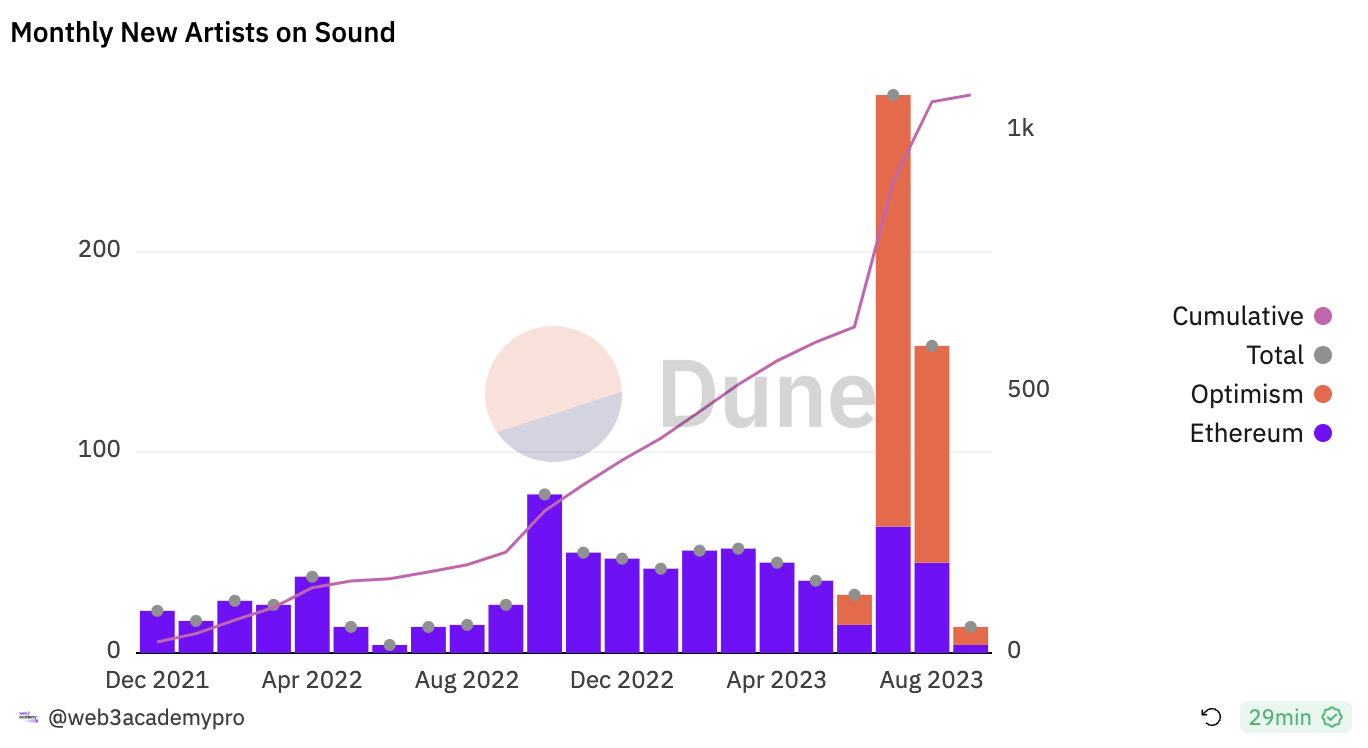
Musicians are also moving onchain…
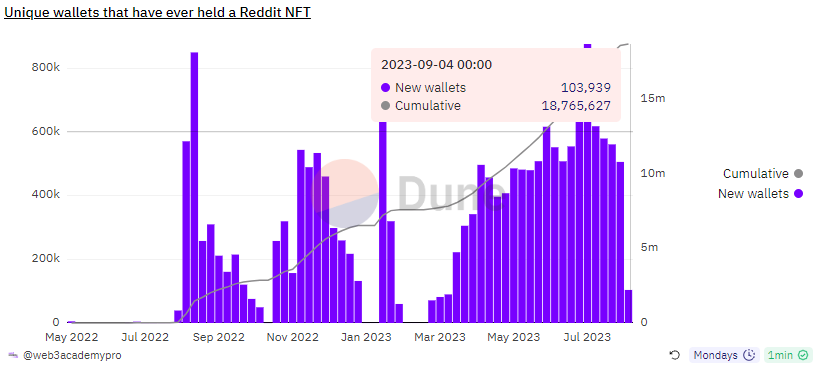
Reddit users are moving their identity onchain… (community points are coming soon too). 👀
And even gambling is moving onchain… 🎰
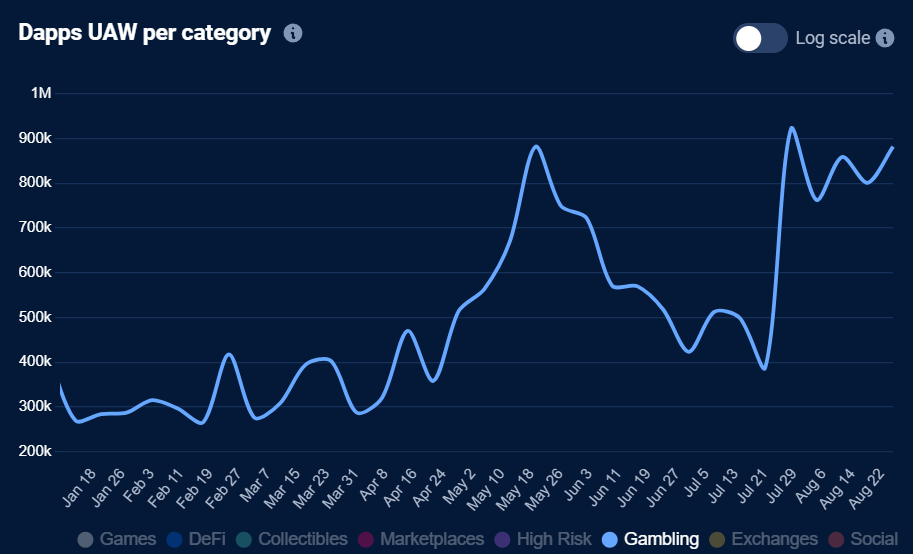
These are just a few examples of various industries which are currently migrating onchain. The numbers are still relatively small, however the way adoption works is: gradually and then suddenly.
For example, signs of DeFi’s potential growth were visible as early as 2019, but it wasn't until DeFi Summer in 2020 that things really took off...
Similarly, this will happen with one or more of the various use-cases we've discussed (or even ones we haven't) in the near future.
Technological Improvements Are Enabling This Adoption 🌊
Much of this growth is happening as a result of Layer 2s providing an abundance of cheap, fast and secure blockspace.
Again, this shows us that the technology is progressing. 🙏
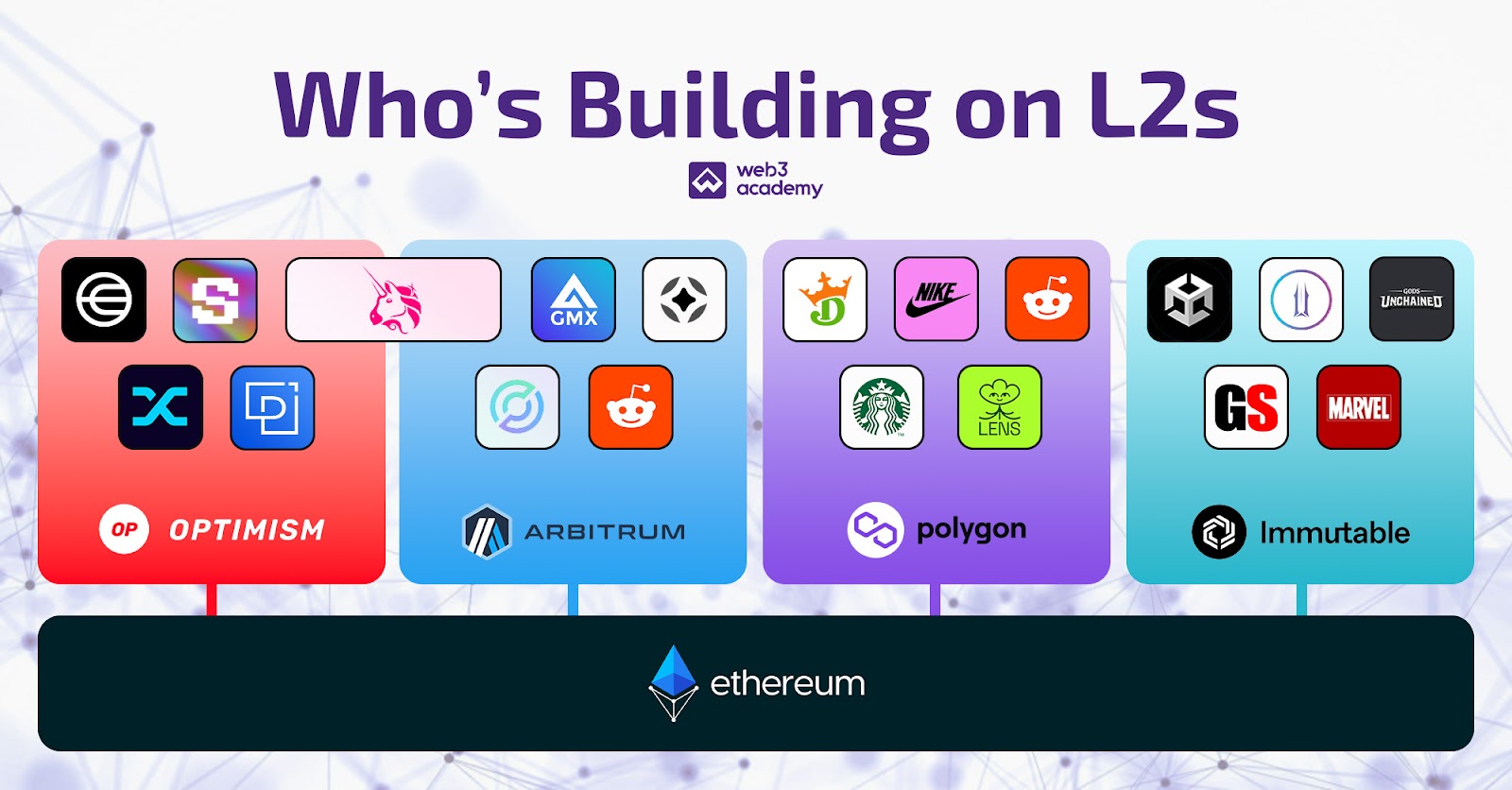
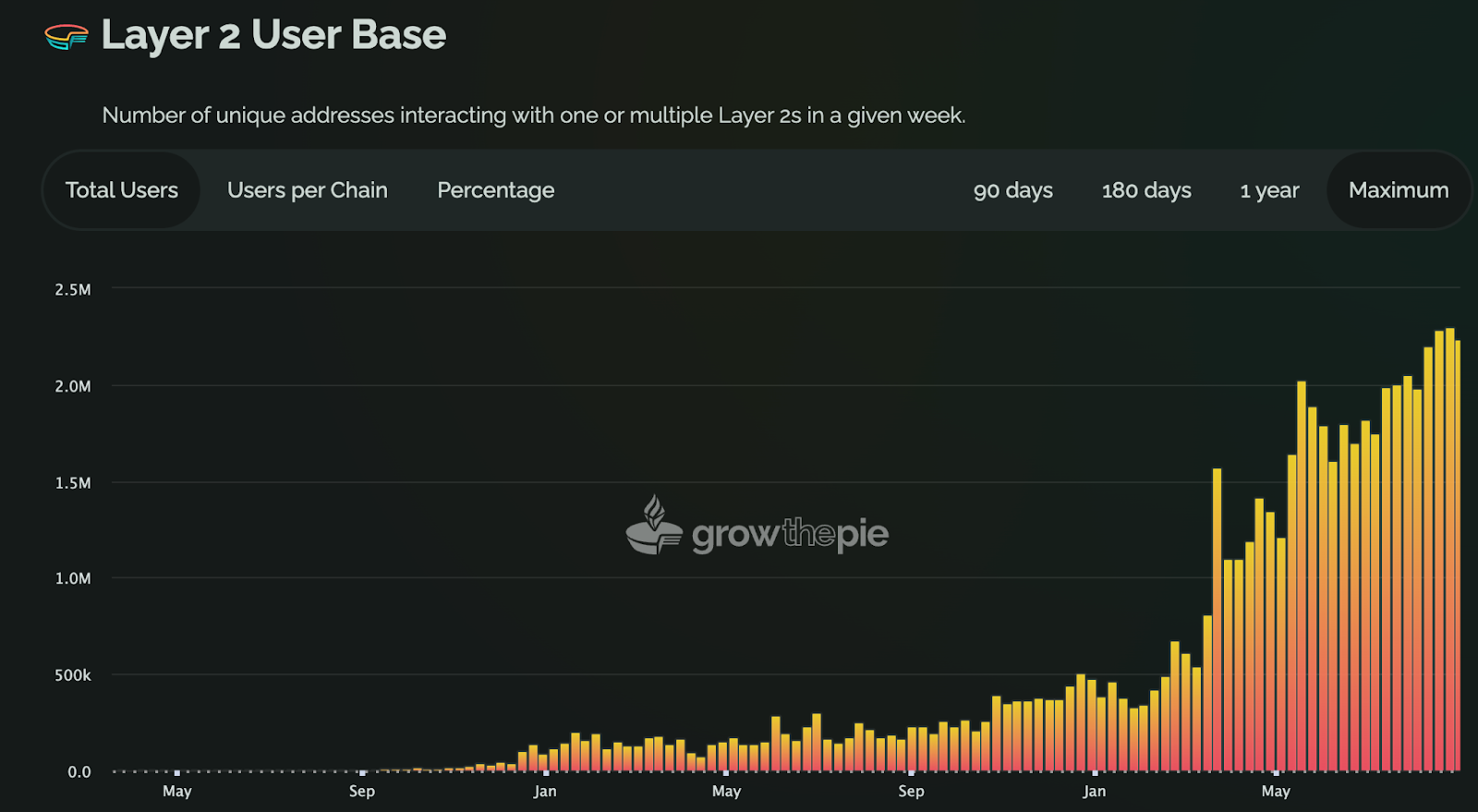
The users on L2s have been going parabolic in 2023…
And, of course, so is the activity on top of L2s…
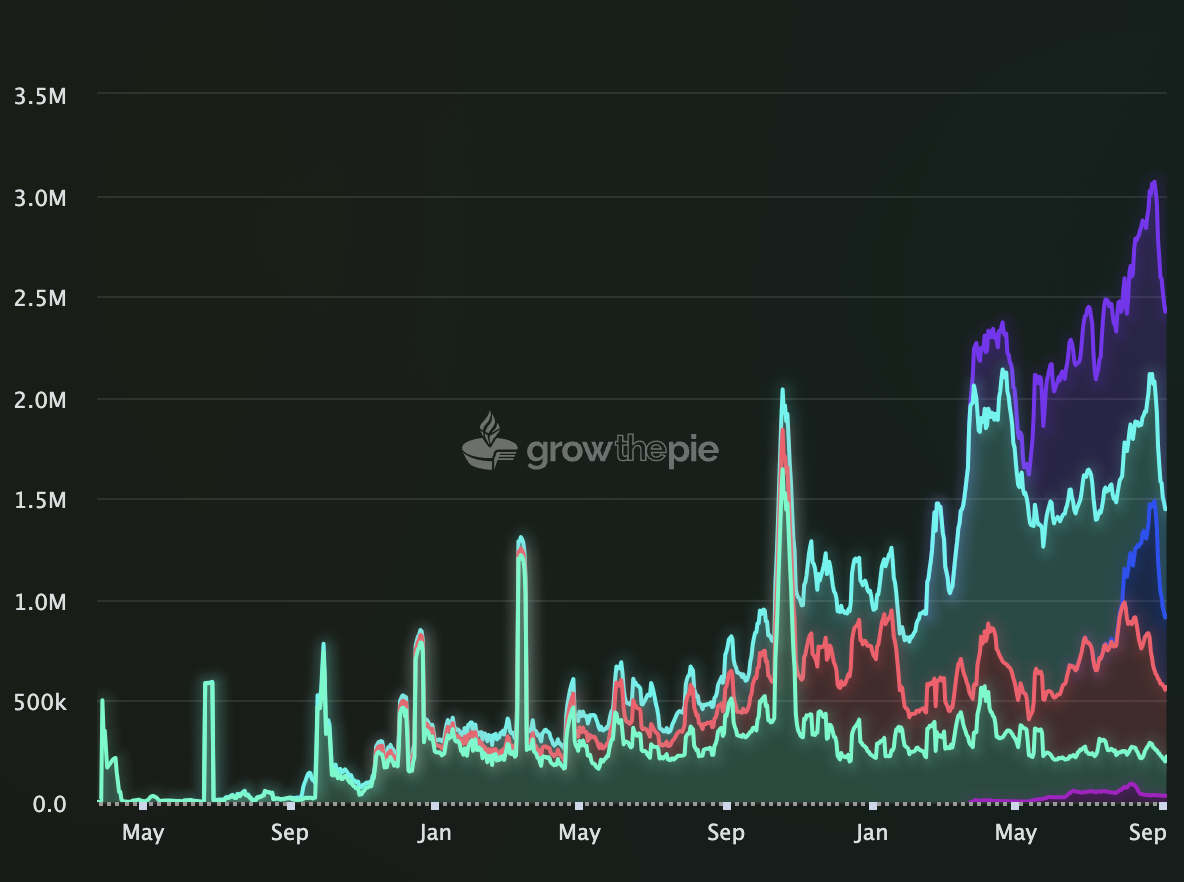
I would expect both of the metrics above to 10x in the next year and maybe even 10x again the year after that (gradually and then suddenly).
And most importantly, for the first time in crypto’s history, all of this activity is happening on top of infrastructure with sustainable economics. 💪
Optimism, Arbitrum, and Base are extremely profitable. Just think about what’ll happen to these numbers if the growth I just mentioned above occurs…
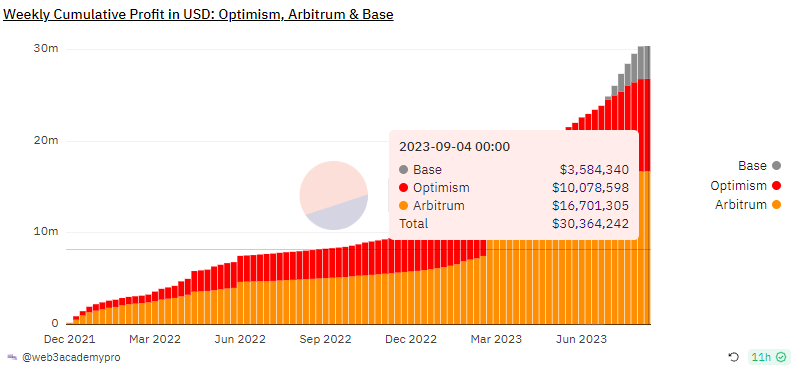
L2s are profitable and so is the technology that settles the transactions, Ethereum. Meaning, this technology is sustainable and here to stay, plus we all have a way to profit from it.
How To Capitalize On This Next Cycle 💰
The wonderful thing about how web3 is designed is we don’t need to predict the specific application or use case that becomes the next big thing during the next cycle.
All we have to do is own the infrastructure that powers it. Remember the value accrual mechanisms within web3…
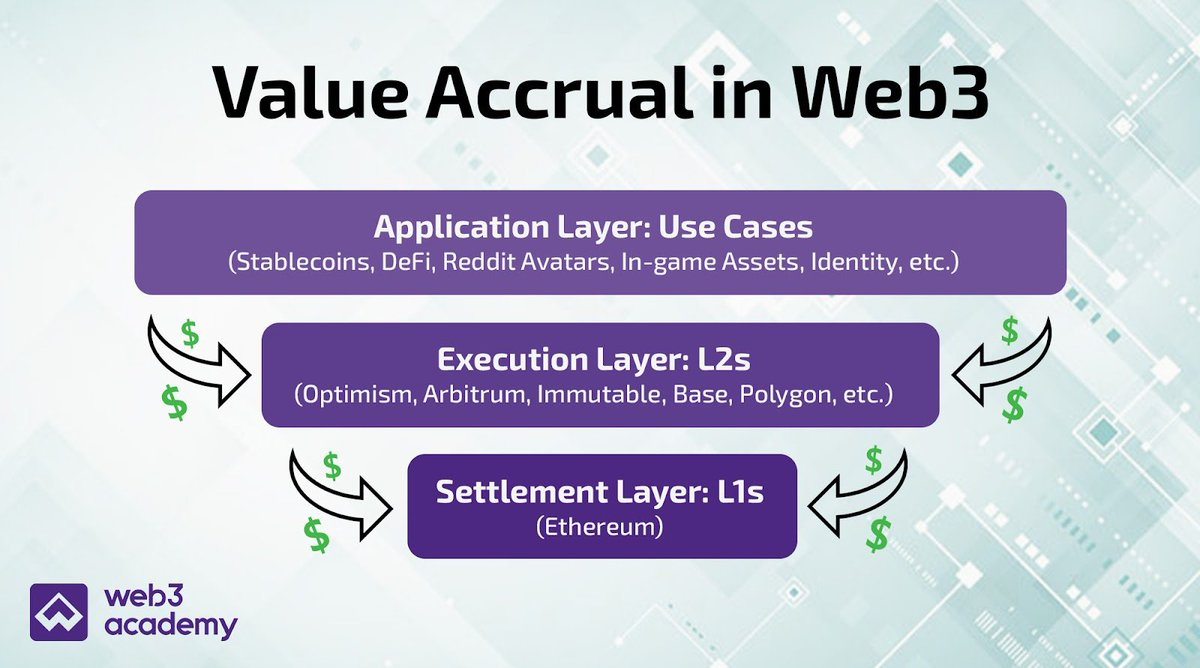
It’s all about transactions and fees.
L2s allow for scalable use cases and applications. Now that the technology is here, use cases and applications are beginning to appear and beginning to gain adoption (see charts above).
Each one of these use cases and applications generate transactions, which generate fees to the L2s as well as fees to Ethereum. While all L2s don’t have value accrual mechanisms to token holders just yet, Ethereum does.
Catch up on the tokenomics of L2s, if you haven't already:
Ethereum's value accrual mechanism: A portion of every fee paid to Ethereum burns some $ETH, making it more valuable due to its scarcity, while the remaining part of the fee goes to those who stake $ETH.
By holding and staking $ETH, you're set to benefit from all sorts of applications built on Layer 2s.
Of course, there will be many other opportunities in the coming cycle as well, which we will do our best to prepare you for. But right now, most people in the world do not understand what I just shared above.
What this means is that there is plenty of upside in this investment as more people begin to realize that the next cycle is coming and where that value will accrue.
Speaking of value accrual, next week we have an incredible report that will help you wrap your head around value accrual in this industry.
Get ready for an iconic piece from Milk Road PRO coming to your inbox next Thursday!
Disclaimer: This article is for informational purposes only and not financial advice. Conduct your own research and consult a financial advisor before making investment decisions or taking any action based on the content.